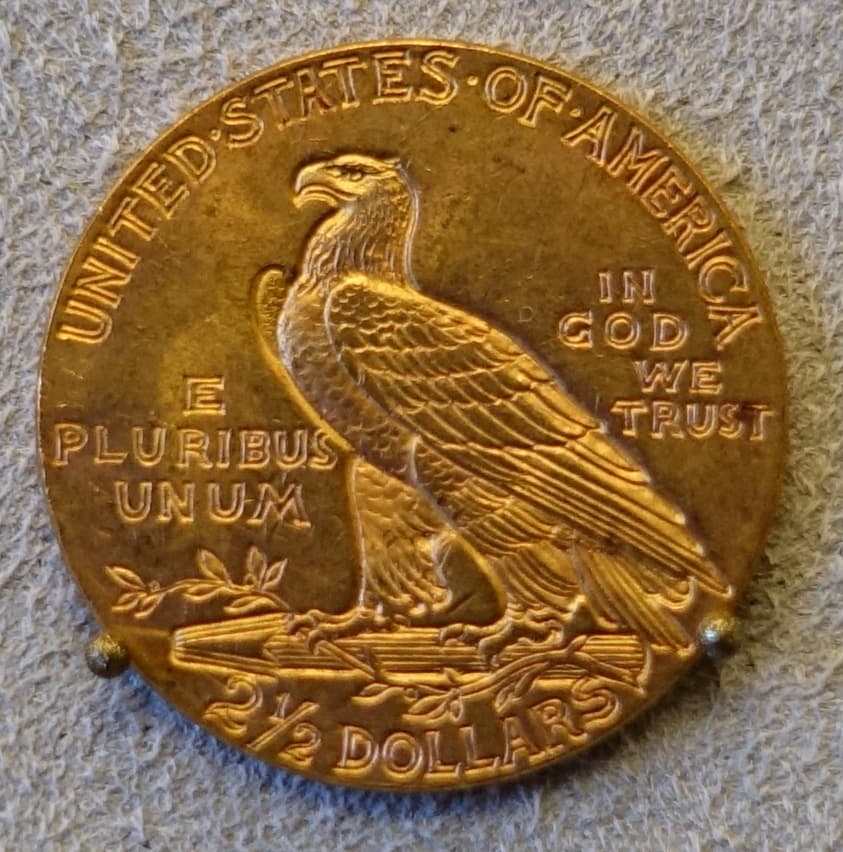
1929 Indian Head Quarter Eagle (Last Year)
- Maker
- U.S. Mint (Philadelphia)
- Year
- 1929
- Rank
- 79 of 100
- Identifier
- $2.50 gold, Indian Head, final-year issue, PCGS MS66
1929 Indian Head Quarter Eagle (Last Year)
Realized at auction: $54,625, dated 2010-03. This is a realized sale. Somebody paid it.
What is it, and why is it in the FLOAT 100?
The last year of U.S. quarter eagle coinage and a conditionally scarce final-year type representative of the incuse Indian design.
$2.50 gold, Indian Head, final-year issue, PCGS MS66
What is the best-sourced number for it?
- Figure
- $54,625
- Kind
- Realized at auction
- Date
- 2010-03
A realized auction price is what a buyer actually paid on the date shown, including the buyer's premium where the sale reported it. It is the strongest kind of reference price, and it is a record of one sale of one object on one day, not a promise of what the next example will bring.
By reference price, 1929 Indian Head Quarter Eagle (Last Year) is number 79 of 100 in the coins entries of the FLOAT 100. 92 of those 100 rest on a realized sale; the rest carry an asking price or a guide value, and each page says which. Rank within the FLOAT 100 itself (79 here) is editorial: how much an object defines its field, not price alone.
How this is made
- The figure
- One reference price, shown with its own kind. FLOAT does not average it with anything or adjust it for time.
- Realized or not
- A realized price is a completed sale. A market asking price and a price-guide value are not sales, and are labeled as such wherever they appear.
- Why no grade ladder
- Most FLOAT 100 entries are individual objects. There is one of this, so there is no population and no spread across grades to show.
- Archive
- 2026-08-08
Track your own
FLOAT is a free tracker. Add the coins you own, keep photos and certificates with each item, and see a value built from real sales at your item's grade. This page is a public reference; it does not offer, price or sell insurance.