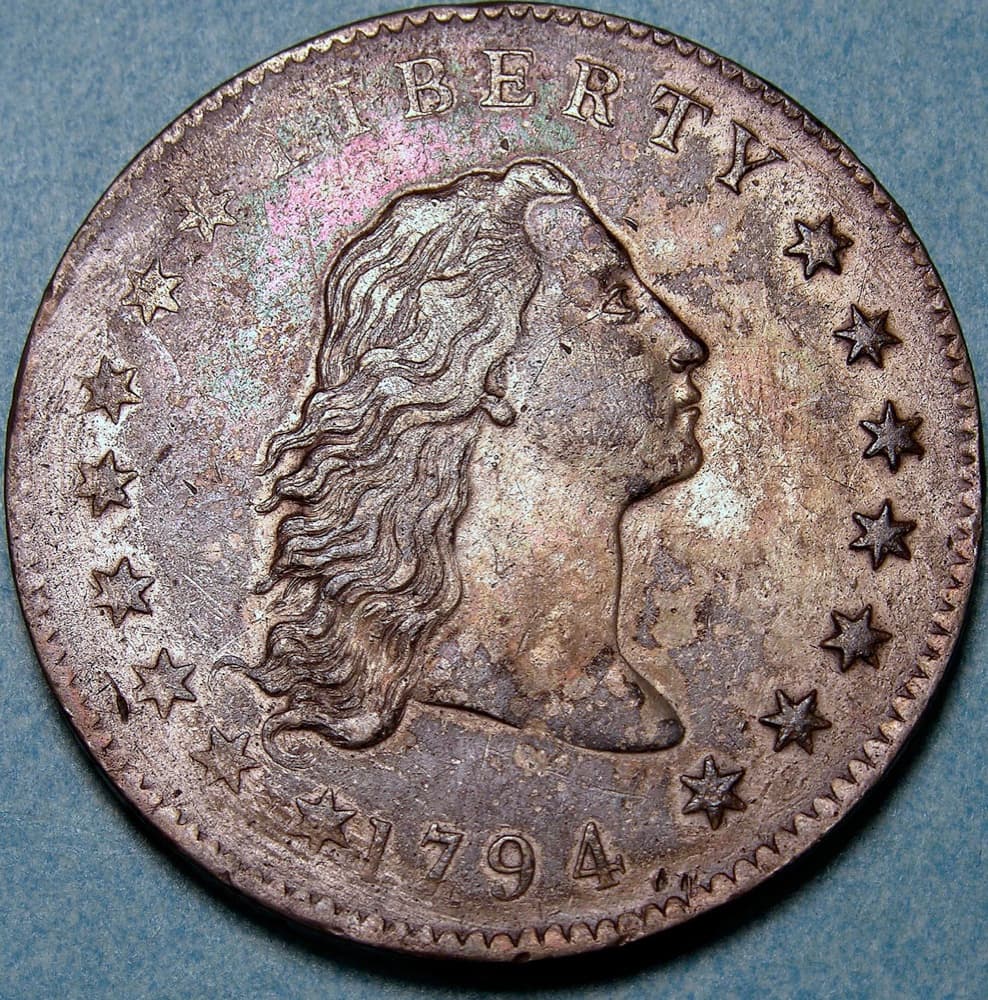
1794 Flowing Hair Silver Dollar
- Maker
- U.S. Mint (Philadelphia)
- Year
- 1794
- Rank
- 2 of 100
- Identifier
- $1 silver, Flowing Hair, silver plug, PCGS SP66 (Cardinal-Morelan specimen, believed first US silver dollar struck)
1794 Flowing Hair Silver Dollar
Realized at auction: $10,016,875, dated 2013-01-24. This is a realized sale. Somebody paid it.
What is it, and why is it in the FLOAT 100?
The first U.S. silver dollar and the first coin ever to break $10 million at auction; a foundational American rarity.
$1 silver, Flowing Hair, silver plug, PCGS SP66 (Cardinal-Morelan specimen, believed first US silver dollar struck)
What is the best-sourced number for it?
- Figure
- $10,016,875
- Kind
- Realized at auction
- Date
- 2013-01-24
A realized auction price is what a buyer actually paid on the date shown, including the buyer's premium where the sale reported it. It is the strongest kind of reference price, and it is a record of one sale of one object on one day, not a promise of what the next example will bring.
By reference price, 1794 Flowing Hair Silver Dollar is number 3 of 100 in the coins entries of the FLOAT 100. 92 of those 100 rest on a realized sale; the rest carry an asking price or a guide value, and each page says which. Rank within the FLOAT 100 itself (2 here) is editorial: how much an object defines its field, not price alone.
How this is made
- The figure
- One reference price, shown with its own kind. FLOAT does not average it with anything or adjust it for time.
- Realized or not
- A realized price is a completed sale. A market asking price and a price-guide value are not sales, and are labeled as such wherever they appear.
- Why no grade ladder
- Most FLOAT 100 entries are individual objects. There is one of this, so there is no population and no spread across grades to show.
- Archive
- 2026-08-08
Track your own
FLOAT is a free tracker. Add the coins you own, keep photos and certificates with each item, and see a value built from real sales at your item's grade. This page is a public reference; it does not offer, price or sell insurance.